

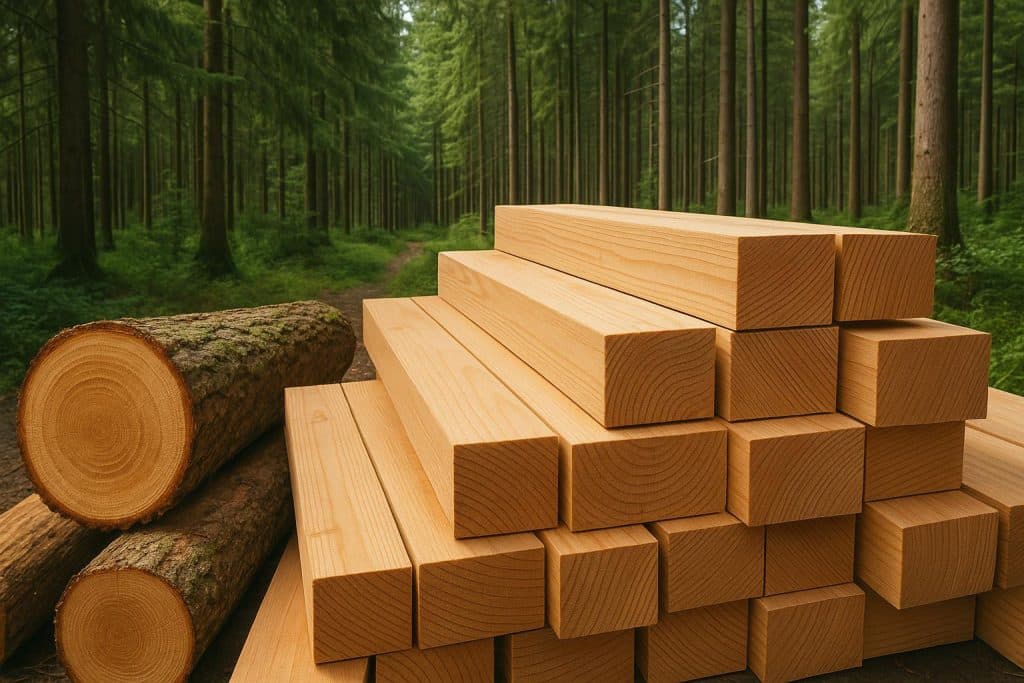
When planning your next building project, the materials you choose can have a significant impact not just on the aesthetics but also on the environment. Sustainable lumber is an eco-friendly alternative that offers the timeless appeal of wood without the heavy environmental cost associated with traditional logging practices. By opting for materials sourced from sustainably managed forests, you are contributing to the health of the planet while still achieving your design goals. Keep reading to understand why sustainable lumber is the smart investment for the future of construction.
How Sustainable Lumber Supports Healthy Forest Management Practices
Sustainable lumber is inextricably linked to healthy forest management. By adhering to stringent standards for sustainable harvesting, forest managers can ensure that their practices help rather than harm the overall health of the forest. These practices include maintaining a mix of tree ages and species, which is critical for sustaining wildlife habitats and preserving the forest’s natural structure.
Certification bodies like the Forest Stewardship Council (FSC) and the Programme for the Endorsement of Forest Certification (PEFC) play a critical role by providing independent verification of sustainable practices. These certifications mean that consumers can trust that their purchase of sustainable lumber supports healthy forest ecosystems. The sustainability labels also encourage foresters and companies to continue their commitment to environmentally sound practices.
Through proper management, forests can be endlessly renewable resources. The demand for sustainable lumber encourages an industry that is centered around replenishment and regeneration. This can be seen in operations like hhforestry.co.uk, where a commitment to sustainability is paramount. They highlight that conscientious forest management not only provides the raw materials needed but also ensures that forests continue to play their critical role in the Earth’s ecosystem.
The Lifecycle of Sustainable Lumber: From Seedling to Sawmill
The story of sustainable lumber begins with a seed. Foresters plant a diverse range of tree species to mimic natural forest conditions, promoting resilience and adaptability. These young trees are nurtured and monitored as they grow, ensuring they contribute positively to their ecosystem. Right from the outset, this practice contrasts sharply with clear-cutting methods that leave land barren and unable to support wildlife or healthy plant life.
As the trees mature, foresters apply scientific knowledge and careful planning to select which trees are ready to be harvested. This decision is based on numerous factors, such as the tree’s age, health, and the overall density of the forest. Sustainable lumber operations prioritize the well-being of the forest, rather than short-term economic gains, which can sometimes be at odds with the principles of sustainability.
Once trees are selected for harvest, forest managers employ precision harvesting techniques that are intended to mimic natural forest disturbances, like the fall of a dead tree. These methods also make it easier for the remaining trees to access sunlight and nutrients, encouraging continued growth and vitality. As a result, the forest can continue to flourish and support biodiversity instead of being reduced to a monoculture plantation or being lost entirely.
Incorporating Sustainable Lumber Into Your Next Building Project: Tips and Best Practices
When incorporating sustainable lumber into your building project, start by sourcing your materials from certified suppliers. Look for sustainability certifications like FSC or PEFC to ensure the wood meets strict environmental and ethical standards. Engaging with these suppliers creates a demand for sustainable lumber, which in turn supports the growth of eco-responsible forestry practices.
To maximize the environmental benefits of sustainable lumber, incorporate design principles that minimize waste and allow for the reuse or recycling of materials. For example, designing for disassembly can enable wood components to be easily repurposed or recycled at the end of their initial use. Additionally, take advantage of the natural insulating properties of wood to enhance your project’s energy efficiency.
Altogether, the choice to use sustainable lumber in your next project supports the environment and promotes a more responsible economy. By prioritizing sustainability, you’re investing in the future, a future where the structures we build and the materials we use reflect our commitment to preserving the planet for generations to come.